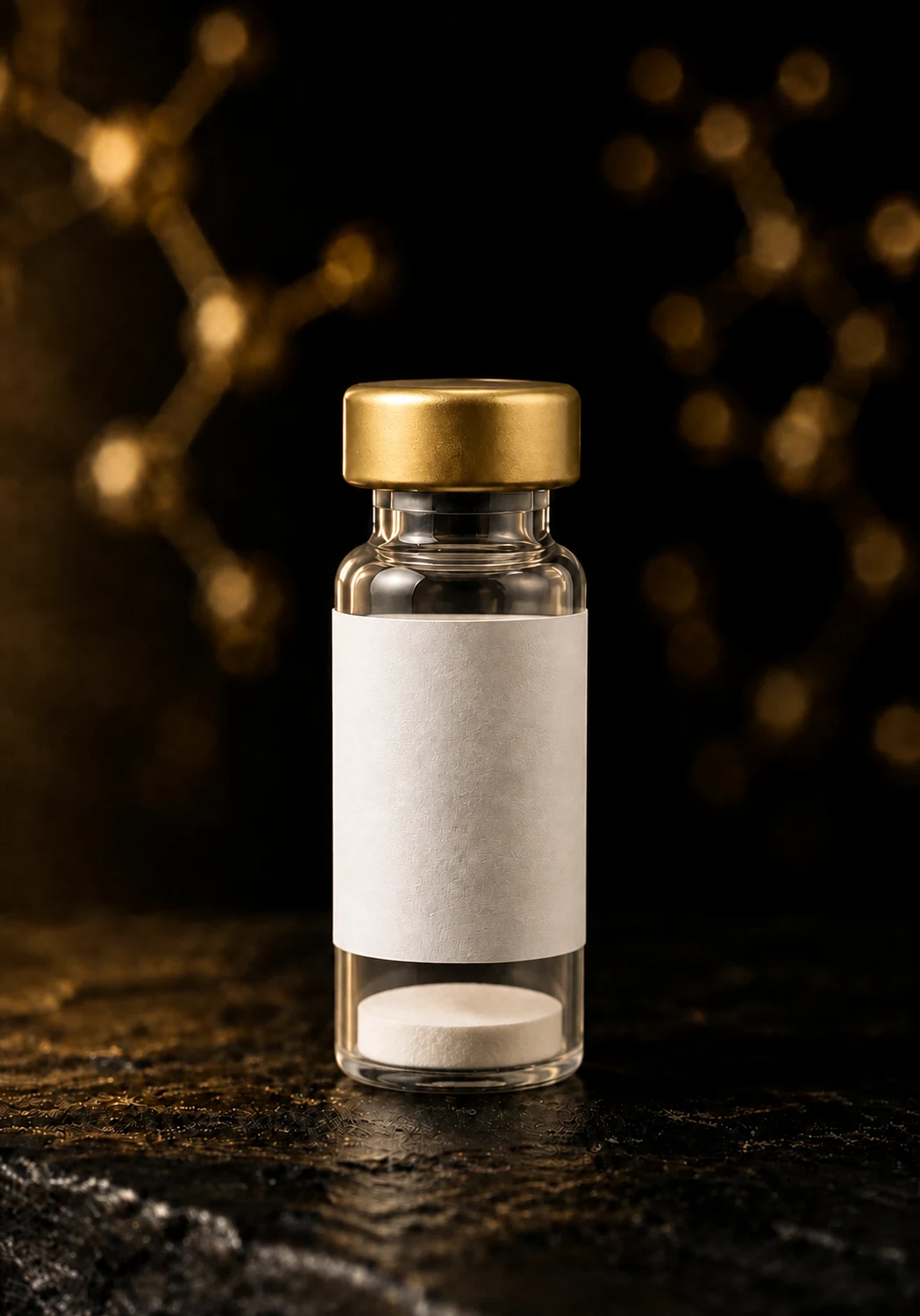
BIOREGULATOR / DIRECT CATALOG PRICING
Cartalax
Cartalax is a Russian bioregulator trade name commonly associated with the tripeptide Ala-Glu-Asp (AED), but the authoritative records reviewed did not independently tie this catalog material to that sequence.
- Format
- Lyophilized research vial
- Listed formats
- 1
- Available now
- 0
- Catalog class
- Bioregulator
Choose a listed format
- 20 mgRequest current pricingRequest pricing
Pricing, availability, quantity tiers, and member eligibility are checked again when an order is submitted.
TECHNICAL OVERVIEW
Identity first, claims kept in scope.
Cartalax is a Russian bioregulator trade name commonly associated with the tripeptide Ala-Glu-Asp (AED), but the authoritative records reviewed did not independently tie this catalog material to that sequence.
The bioregulator classification supports catalog navigation; it does not establish efficacy, safety, approval, human use, or equivalence to a material used in a cited study.
SPECIFICATIONS
- Material class
- Bioregulator
- Physical format
- Lyophilized vial
- Research status
- Research purposes only
- Commerce status
- Contact for current availability
PLAIN-LANGUAGE RESEARCH SNAPSHOT
What researchers have actually studied.
Cartalax is a Russian bioregulator trade name commonly associated with the tripeptide Ala-Glu-Asp (AED), but the authoritative records reviewed did not independently tie this catalog material to that sequence.
- Research covered
- AED has been examined in cultured human embryonic bone-marrow mesenchymal stem cells for changes in expression of aging-related genes. That study supports an AED laboratory identity, not the composition or tissue specificity of a trade-named Cartalax vial.
- Important limit
- No independently replicated clinical evidence or authoritative lot-level identity was found for the catalog item. Do not present AED cell-culture findings as proof of cartilage effects or as verification that this material is AED.
- Authoritative sources
FACTUAL FAQ
Cartalax catalog questions
What formats are currently listed?
20 mg. Current price and stock state appear above.
What did researchers study?
AED has been examined in cultured human embryonic bone-marrow mesenchymal stem cells for changes in expression of aging-related genes. That study supports an AED laboratory identity, not the composition or tissue specificity of a trade-named Cartalax vial.
What is the most important evidence limit?
No independently replicated clinical evidence or authoritative lot-level identity was found for the catalog item. Do not present AED cell-culture findings as proof of cartilage effects or as verification that this material is AED.
How should this listing be interpreted?
It is a research-material catalog listing, not medical guidance, a dosage recommendation, a safety or efficacy claim, or evidence of regulatory approval.
Where can I review related scientific references?
Use the PSC research library to locate general and compound-related source material. Open related research references →